DNA is code Turing is its operating system

TuringDNA is the operating system for genetic engineering. Describe the experiment; it designs the variants, guides, plasmid and primers.

01 · Design · Read · Build · Edit

Four engines, one workspace.

01 Design

ESM & directed-evolution engine

Language-model scoring and in-silico directed evolution on your target, with host, motif and liability filters applied before the bench.

  • InputA target sequence, or a PDB structure
  • OutputRanked variants with per-position scores
Fig. 02 — variant ranking

02 Read

Evo 2 genome model

Zero-shot, per-nucleotide scoring with Evo 2 across coding, regulatory and non-coding DNA.

  • InputA reference sequence up to 50,000 nt
  • OutputPer-nucleotide scores across coding, regulatory and non-coding regions
Fig. 03 — nucleotide scoring

03 Build

Plasmid building

Paste or import a sequence and get an annotated plasmid, with simulated digests and gels.

  • InputA pasted sequence, or GenBank, FASTA, SnapGene
  • OutputAn annotated plasmid, with simulated digest and gel
Fig. 04 — plasmid map

04 Edit

CRISPR design

Guides scored for on-target activity and off-target risk, with every cut site mapped onto the construct you are editing.

  • InputThe construct open in the editor, and the edit you want
  • OutputScored guides, with cut sites mapped onto the plasmid
Fig. 05 — guide track
01 / 04

02 · The rest of the platform

Everything else you need.

05

Annotation & alignment

Features, ORFs, domains, MSA.

06

Codon optimisation

Host tables, Golden Gate sites removed.

07

Primers & cloning sim

Gibson, Golden Gate, restriction.

08

Structure view

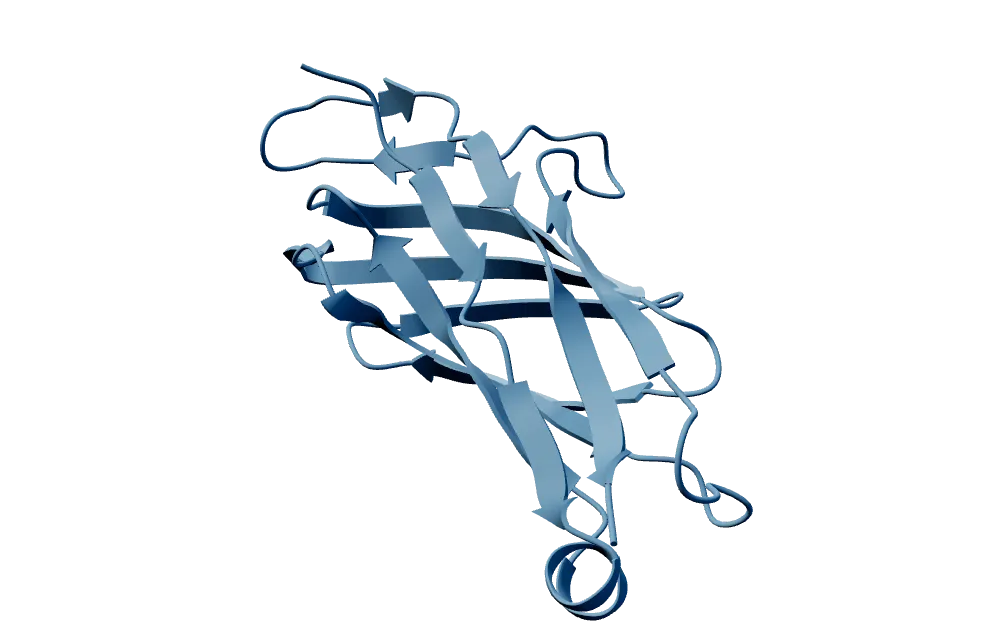
The AlphaFold fold beside the sequence.

09

Protein docking

Two proteins in, the contact residues out.

10

Variant libraries

Reopen, log results, re-rank.

11

Vendor ordering

Guides to IDT, Synthego or Twist.

12

Materials & methods

A methods paragraph on every result.

13

Shared projects

Invite collaborators into a project.

03 · The conversational engine

Meet Turing.

Run the whole workflow in plain language.

  • No scripting. Say it the way you would to a colleague.
  • No tab-switching. Design, build and edit in one thread.
  • No re-keying. Every result stays on its construct.
Turing Model · Achilles

Tell me what you're engineering.

Improve PCSK9 thermostability without losing LDLR binding.
Resolving the gene
Scored every position against the wild type and kept the substitutions that hold the binding interface. Ranked library and map are below.
Ranked library Plasmid map Mutation landscape Virtual gel

04 · The commons

Every figure fetched live from the engine · nothing hand-entered

It gets smarter with every lab that uses it.

Your measurements sharpen the model. Your sequences never leave.

—

Substitution types mapped, live

—

Spearman ρ against published bench data

—

Growth history starts with the next update

Fig. 06 — substitution-effect atlas Live · from / to amino acid

Loading the commons…

Checked against Stiffler 2015, Melamed 2013 and McLaughlin 2012, the public benchmarks used to grade protein language models. Explore the full Field Atlas →

The researcher network

Profiles · research feed · direct messages

Find the people behind the research.

Meet researchers, share what you are working on, and start a collaboration.

  • Share the work. A result, a preprint, a question or a project card.
  • Follow the field. See what the people you track ship.
  • Talk directly. Message, comment and start a collaboration.
Explore the researcher network →

05 · Your data

Bring your project. Keep it yours.

In

GenBank, FASTA, SnapGene, raw DNA or protein, plate-reader CSV.

Out

GenBank and CSV, a methods paragraph, ordering to IDT, Synthego and Twist.

Not training data

The model is public. Your sequences are not.

Audit trail

Origin, author, parameters and parent version on every construct.

06 · Pricing

Plans.

The whole workbench is free. Compute runs on credits.

  • AchillesESM-2 35M on CPU. Fast and light on credits.
  • PrometheusESM-2 650M on GPU, plus DNA generation. More credits per run.

Free

$0

For trying the whole platform.

  • The full workbench
  • 10 credits a month
  • Your work kept for 45 days
Open Turing

Starter

$15/month

For a first real project.

  • Everything in Free
  • 75 credits a month
  • No expiry on your work
Get started

Enterprise

Let’s talk

For labs and teams.

  • Seats for the whole lab, one credit pool
  • Volume pricing
Contact us

One credit is about one everyday design run; heavier runs use more. Prices in USD, sold through our reseller Paddle, with tax shown at checkout.

Before you buy

Seller
TuringDNA is a trading name of Tengo Gzirishvili, an individual entrepreneur registered in Georgia, Tbilisi. info@turingdna.com
Price and tax
Starter $15, Pro $50 per month, excluding VAT or sales tax. Paddle, our Merchant of Record, adds your country’s tax and shows the total before you confirm.
Renewal
Your subscription renews automatically every month until you cancel. Cancel at paddle.net or from your Paddle receipt; access runs to the end of the paid period.
Withdrawal
14 days to withdraw, under the Law of Georgia on the Protection of Consumer Rights (2022) and equivalent EU, EEA and UK rights. See the Refund & Cancellation Policy and Terms.

07 · Questions we actually get

Questions we actually get

What models are behind the engine?

ESM-2 runs protein scoring and Evo 2 handles DNA. A larger 650M model is available too — it runs on a rented GPU and uses more of your monthly credits. Every account can reach both models; your plan sets how many credits you get, not which models you can run.

Who owns what I design here?

You own everything you put in and get out. The audit trail on each construct is exportable for IP and for reviewers.

Can I use it without writing code?

Yes. The editor and the design engine are conversational and visual.

What does it cost?

The whole workbench is free, with 10 compute credits a month. Starter is $15/month for 75 credits, and Pro is $50/month for 250 credits with no expiry on your work and top-ups anytime. See Pricing.

Open to everyone

Open Turing.

No request, no waitlist. Load your sequences and run.