
The highway for molecular and synthetic biology.

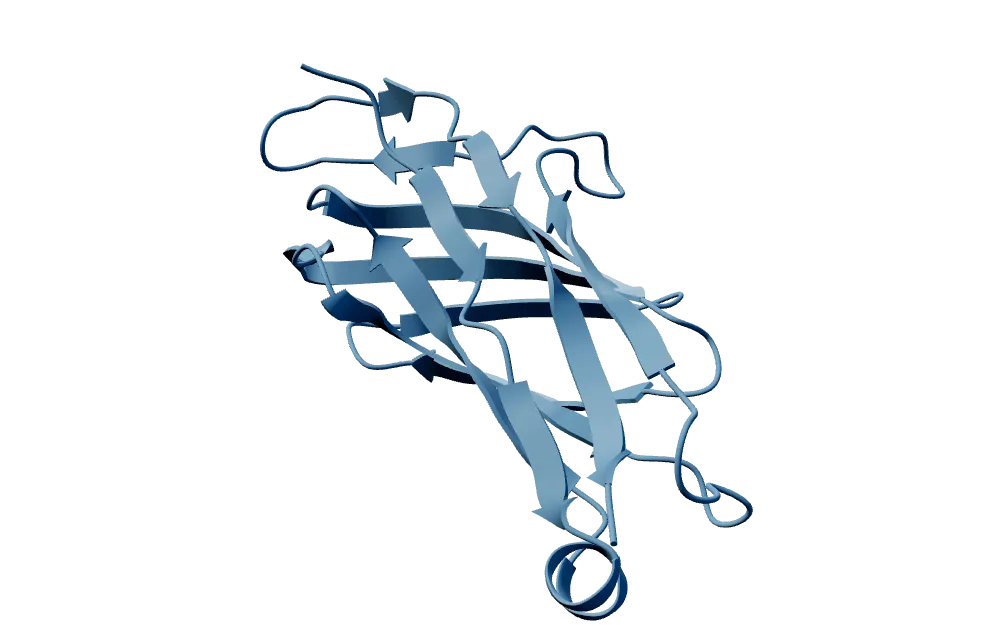
Fig. 01 — cohesin module · PDB 1OUV · ribbon

01 · What TuringDNA is

TuringDNA is the operating system for biology. Every tool you need in one platform, without the friction.

02 · Design · Read · Build · Edit

Our four main engines:

Section pins · vertical scroll drives horizontal travel · 4 stops

01 Design

ESM & directed-evolution engine

TuringDNA runs language-model scoring and in-silico directed evolution on your target, proposing variants and ranking them by predicted fitness. We give you constraints like expression host, motif blocks, and liability filters up front, so you catch them on screen instead of at the bench.

  • InputA target sequence, or a PDB structure
  • OutputRanked variants with per-position scores
Fig. 02 — variant ranking

02 Read

Evo 2 genome model

DNA-level zero-shot scoring on Evo 2 to predict functional impacts of genetic variants. Running on StripedHyena 2 rather than a transformer, Evo 2 can provide per-nucleotide scores even across large context windows.

  • InputA reference sequence up to 50,000 nt
  • OutputPer-nucleotide scores across coding, regulatory and non-coding regions
Fig. 03 — nucleotide scoring

03 Build

Plasmid building

Import or paste a sequence and get back a fully annotated plasmid. Simulate digests and run gels before touching the bench, and integrate with previously designed variants without needing to handle file uploads.

  • InputA pasted sequence, or GenBank, FASTA, SnapGene
  • OutputAn annotated plasmid, with simulated digest and gel
Fig. 04 — plasmid map

04 Edit

CRISPR design

Generate guide RNAs scored with Doench on-target rules and checked for off-target specificity, directly against the construct you're already editing in Turing. Every guide's cut site is mapped back onto the plasmid map, so you can move from evolved variant to edited construct without leaving the conversation.

  • InputThe construct open in the editor, and the edit you want
  • OutputScored guides, with cut sites mapped onto the plasmid
Fig. 05 — guide track
01 / 04

03 · The rest of the platform

Static grid · rows reveal on entry, 40 ms stagger

Everything else you need.

All your tools, put into one toolbox.

04

Annotation & alignment

Auto-feature calling, MSA, ORF and domain detection.

05

Codon optimisation

Host tables, GC and repeat control, expression tuning.

06

Primers & cloning sim

Gibson, Golden Gate, restriction — simulated before you order.

07

Structure & docking view

Predicted fold beside the sequence, not in another tab.

08

Library planning

Variant libraries, barcoding, plate layout.

09

Protocol export

Bench sheet, liquid handler, ELN and LIMS write-back.

10

API & batch

Python SDK, REST, headless runs for the terminal half of the lab.

11

Versions & workspaces

Branch a construct, review a change, share a project.

04 · The conversational engine

Heading rises on entry · the transcript plays itself in

Meet Turing.

Run the whole workflow in plain language.

Describe what you're engineering the way you'd say it to a colleague. Turing resolves the gene, scores every substitution, builds the map and hands back the files — and asks when it needs a decision from you rather than guessing.

  • No scripting. The engine and the editor take the same instruction.
  • No tab-switching. Design, build and edit answer in one thread.
  • No re-keying. Every artifact attaches to the construct it came from.
Turing Model · Achilles

Tell me what you're engineering.

Improve PCSK9 thermostability without losing LDLR binding.
Resolving the gene
Scored every position against the wild type and kept the substitutions that hold the binding interface. Ranked library and map are below.
Ranked library Plasmid map Mutation landscape Virtual gel

Fig. 04 — Turing language model

05 · The commons

Every figure fetched live from the engine · nothing hand-entered

It gets smarter with every lab that uses it.

Your measurements sharpen the model. Your sequences never leave.

Substitution types mapped, live

Spearman ρ against published bench data

Growth history starts with the next update

Every measurement you log — de-identified, never your sequence — sharpens the model for everyone who comes after. A closed system only improves when its own team retrains it. This one compounds on its own.

Fig. 06 — substitution-effect atlas Live · from / to amino acid

Loading the commons…

Checked against Stiffler et al. 2015 Cell, Melamed et al. 2013 RNA, and McLaughlin et al. 2012 Nature — the same public benchmarks the field uses to grade protein language models. Explore the full Field Atlas →

06 · Imports and exports

Full-bleed ticker on the ground · runs at 0.3× scroll velocity

Bring the project you already have.

In. GenBank, FASTA, SBOL, PDB, SnapGene, plate CSV, Benchling export. Bring the project you already have; you don't restart it here.

Out. Synthesis vendors, liquid handlers, ELN and LIMS, Python SDK, REST. TuringDNA runs everything from start to end.

06 · Provenance, security

No motion — this section should feel like it's standing still

Provenance, security and IP

Your sequences are not training data.

The model is open to the public, but your input data is not. Everything stays private.

Audit trail

Every construct records the origin, author, parameters, and parent version. Exportable for IP and for reviewers.

08 · Tiers

Every capability listed on both sides, not just the differences

Achilles and Prometheus.

Same platform, different models.

AchillesEntry PrometheusFull
Protein scoring
ESM-2 35M · in-process, CPU
ESM-2 650M · Modal GPU
DNA generation
Not included
Included
DNA scoring
Evo 2 7B
Evo 2 7B
Directed evolution
Included
Included
Plasmid building
Included
Included
CRISPR design
Included
Included
Primers & cloning sim
Included
Included
Structure & docking
Included
Included
API & batch
Included
Included
Price
Per seat
Coming soon
Coming soon

09 · Questions we actually get

Questions we actually get

What models are behind the engine?

ESM-2 runs the directed evolution engine on the free tier, while the paid tier grants access to ESM-2's 650M model.

Who owns what I design here?

You own everything you put in and get out. The audit trail on each construct is exportable for IP and for reviewers.

Can I use it without writing code?

Yes. The editor and the design engine are conversational and visual.

What does it cost?

Opening it costs nothing — the model and the editor are public. Pricing for more powerful compute is paid.

Open to everyone

Open Turing.

No request, no waitlist. Load your sequences and run.